The Pill Bottle Math That Never Makes It to the Counseling Window
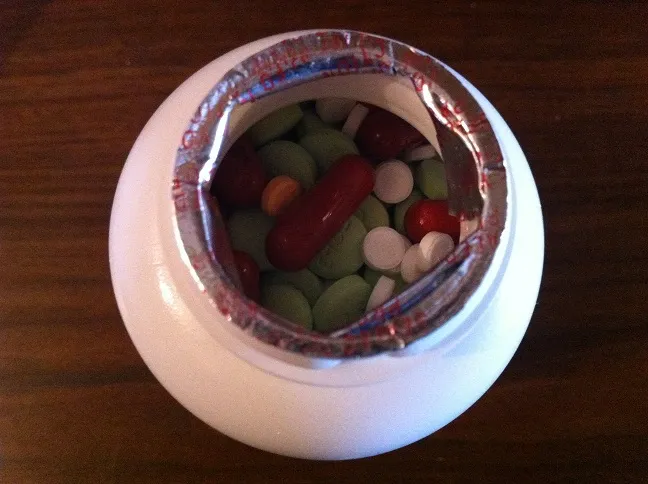
Photo: ParentingPatch, CC BY-SA 3.0, via Wikimedia Commons
Few things at the pharmacy counter feel more personal than a pill bottle that seems to argue with your calendar. The label says a 30-day supply. You count 28 tablets. Or the bottle holds 90, but the refill isn't due for three months. Or you leave with a partial fill and the math gets even stranger.
Most of the time, no one swapped your medication or shorted you. You're looking at the difference between quantity and days supply—two numbers that sound like they should match, but often don't.
Quantity is a count. Days supply is an estimate.
Quantity is the number of units dispensed: tablets, capsules, milliliters, grams, puffs, or patches. Days supply is how long the pharmacy and your insurance plan expect that quantity to last based on the directions.
If the label says 'take one tablet by mouth once daily' and the bottle contains 30 tablets, the days supply is usually 30. If the directions say 'take one tablet twice daily,' those same 30 tablets are a 15-day supply. The bottle didn't change. The directions did.
This is why two prescriptions with the same quantity can have different days-supply numbers. A 90-count bottle can be a 90-day supply, a 45-day supply, or something else depending on how the medication is taken.
Why a 'month' can arrive as 28 tablets
A calendar month is not a fixed number of days. February has 28 days in a common year, but most months have 30 or 31. A 28-count package can come from manufacturer packaging, a four-week dosing cycle, or a drug that is meant to be used for 28 days. It does not automatically mean the pharmacy thinks every month is February.
Some plans and pharmacies default to 30-day supplies for billing. Others use 28-day cycles for certain products. If your refill date lands a couple of days before or after the same date next month, that gap is often the calendar doing calendar things—not a sign that someone miscounted.
The 90-day bottle and the refill that isn't due yet
Maintenance medications are often dispensed in 90-day supplies, especially through mail order or when your plan encourages a three-month fill. If you take one tablet daily, 90 tablets is 90 days. If you take two tablets daily, 90 tablets is 45 days. The quantity is the same; the days supply is not.
Your insurance plan may also have rules about maximum days supply. Some plans pay for 30 days at a retail pharmacy and 90 days by mail. Some require a 30-day first fill before approving a longer one. A label that says 90 tablets but lists a refill date three months out is usually following those rules, not hiding a shortage.
Packaging quirks: tubes, inhalers, and eye drops
Not every prescription is counted in tablets. Creams and ointments are measured in grams. Liquids are measured in milliliters. Inhalers are measured in puffs or doses. Eye drops are estimated by volume and drop size.
That means days supply for these products is often an educated estimate. A 15-gram tube of cream used 'thinly to affected areas twice daily' does not come with a precise tablet count. An inhaler labeled for 120 puffs may last 30 days if you use four puffs daily, or 60 days if you use two. The math depends on your directions and how closely you follow them.
Partial fills: when the bottle is intentionally short
Sometimes the pharmacy does not have the full quantity on hand. Instead of making you wait, it may dispense a partial fill and owe you the rest. The label might show the quantity dispensed for that portion, and the days supply may reflect only that portion.
A partial fill is not the same as a mistake. But it can change your refill date and your copay. Ask whether a balance is still owed, when it will be ready, and whether you will pay another copay when you pick it up. In 2026, those details can vary by pharmacy and insurance plan, so it is worth getting them in writing—or at least on your phone.
When the math is worth a question
Sometimes the label really does deserve a second look. If the directions say 'take one tablet twice daily' but the days supply says 30 and the quantity is 30, that is a mismatch worth asking about. If you are told to take half a tablet daily and the bottle contains 30 tablets, the days supply should be closer to 60, not 30.
You do not need to accuse anyone of an error. Try: 'Can you help me understand how the quantity and days supply were calculated?' That question gives the pharmacy a chance to check the directions, the insurance billing, and whether a partial fill is involved.
Plain questions for the pharmacy counter
- What days supply did you bill to my insurance?
- Does that days supply match the directions on this label?
- Is this a partial fill? If so, what balance is still owed, and will I pay another copay?
- Is the quantity limited by my insurance plan, the package size, or the manufacturer?
- Will my refill date change if this is a 28-day package instead of a 30-day supply?
- If I take this differently than the label says, who should I tell before I run out?
The takeaway
A days-supply number is not a promise about the calendar. It is a billing and safety estimate based on the directions, the package, and your plan's rules. Quantity is what is in the bottle. Days supply is how long that bottle is expected to last. When the two seem to argue, ask a calm, specific question. Most of the time, the answer is simpler than the label makes it look—and you leave knowing exactly what you have.