The Water Part of the Pill: Why Take With Water Isn’t Just a Chaser
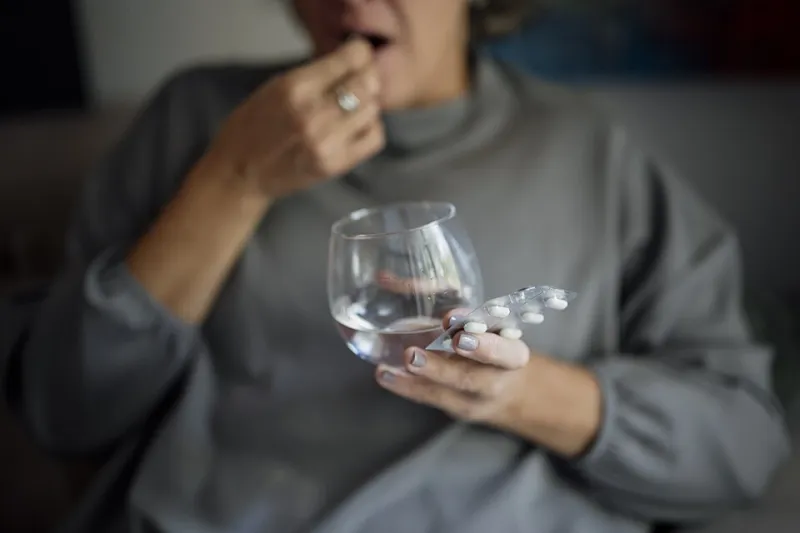
Photo: Shixart1985, CC BY 2.0, via Wikimedia Commons
You tip a pill into your mouth, take a quick sip from the glass by the sink, and swallow. Done. For a lot of medicines, that is genuinely fine. But the label says take with water for a reason, and sometimes that reason is bigger than making the pill easier to get down.
Water can help a tablet break apart, move down the esophagus, and get absorbed the way the drugmaker intended. It can also keep certain pills from parking in your throat and causing trouble. So while nobody needs to turn a pharmacy label into a chemistry seminar, it helps to know when the glass of water is part of the dose and when a sip is basically a rounding error.
The instruction is doing more than helping you swallow
Swallowing is the obvious job. A dry pill can stick to the side of your throat or esophagus, especially if you take it lying down or with too little liquid. That is uncomfortable for almost anyone, and for some medications it can lead to heartburn, chest pain, or irritation that lingers.
But water also helps with the less visible part: getting the medicine into a form your body can use. Some tablets need fluid to dissolve properly. Some capsules need enough liquid to move along instead of clinging to tissue. And some drugs are simply pickier about how they are taken because of how they affect the esophagus or how they are absorbed.
This is why take with water is not the same as take with whatever is in your cup. Coffee, soda, juice, milk, tea, and sports drinks are not automatically interchangeable with water. Sometimes they are fine. Sometimes they are not. That is a good question for the pharmacist, not a guess you have to make alone.
How much water counts as enough?
For many medicines, a full glass means about 8 ounces. In US terms, a standard 16.9-ounce water bottle is roughly two of those glasses. That is a useful mental measure if you are standing at the kitchen sink wondering whether a gulp is enough.
But not every pill needs a full glass. Some labels say to take with a sip, and some medications are taken with food and a smaller amount of liquid. The safest default is this: if the label says take with water and your pharmacist has not told you otherwise, use a full glass of plain water. If you have been told to limit fluids because of heart failure, kidney problems, or another condition, ask how much water is right for you rather than guessing in either direction.
A tiny sip can be enough to get a small tablet down. It is not automatically enough to protect your esophagus or help a picky pill dissolve. If you are taking something that warns against lying down right after, or something known to irritate the throat, a sip at bedtime is not the same as a glass of water while you are still upright.
The pills that tend to be pickiest
You do not need to memorize a list. But a few familiar examples explain why the instruction matters.
- Bisphosphonates such as alendronate and risedronate are famous for their instructions: plain water, full glass, and stay upright for about 30 minutes. Food, other drinks, and other medicines can get in the way.
- Doxycycline and related antibiotics are often taken with a full glass of water, and you may be told not to lie down right after. They can irritate the esophagus if they get stuck.
- Potassium chloride tablets are another example where water and posture can matter. They are not a pill to chase with a tiny sip and then flop onto the couch.
- NSAIDs like ibuprofen and naproxen are sometimes taken with food and water to reduce stomach upset. The water is not the star of the show, but it is not decoration either.
- Iron supplements and some extended-release tablets can also come with specific instructions. Read the label, and ask if it is unclear.
That does not mean every tablet is a delicate little machine. Many medicines are forgiving. The point is that the label is telling you something useful, and the picky pills are the ones where improvising can backfire.
Is a sip at bedtime enough?
Sometimes the label says to take a medicine at bedtime. That does not always mean you should take it while already horizontal with a teaspoon of water. Gravity is part of the equation. If you take a pill and immediately lie down, it has less help getting down the esophagus.
For medicines that are known to irritate the esophagus, the usual advice is to take them with a full glass of water and stay upright for a while afterward. If your label says bedtime, ask the pharmacist what that means in practice for this specific drug. It may be fine to take it right before bed. It may be better to take it earlier in the evening with enough time to sit or stand. That is exactly the kind of small detail a pharmacist can answer in under a minute.
When swallowing pills is hard
Do not jump straight to crushing, splitting, chewing, or hiding a pill in applesauce just because the swallow is difficult. Some tablets are designed to release slowly, some taste terrible, and some can be dangerous if altered. A pill that is not supposed to be crushed can become a very different dose once the coating is broken.
There may be other options: a liquid, a different strength, a tablet that can be split, or a completely different medicine. That is a conversation to have with your pharmacist or prescriber, not a workaround to improvise at the kitchen table.
A plain-language script for the pharmacy counter
You do not need a speech. Try one or two of these:
- I have trouble swallowing pills. What are my options for this prescription?
- The label says take with water. How much water is enough, and does it have to be plain water?
- Can I take this with coffee or juice, or will that change how it works?
- Do I need to stay upright after taking this, and for how long?
- If I take it at bedtime, is a sip of water enough, or should I take it earlier?
- Can I crush or split this tablet, or is that a no?
Those questions are normal. Pharmacists hear them all the time, and they would much rather answer them than have you struggle silently or guess wrong.
The takeaway
The glass of water is not just a chaser. For some medicines, it is part of how the dose gets where it needs to go and how you avoid a sore throat or a stuck pill. Use plain water unless you have been told otherwise, use enough of it when the label asks for a full glass, and stay upright if the medicine calls for it.
And if the instruction on the bottle does not match what you can realistically do, say so at the counter. A good pharmacist can help you turn take with water into a plan that actually works in your kitchen, your workday, and your bedtime routine.