The One-Page Medication Sheet That Does the Talking When You Can't

Waiting rooms have a way of turning a simple question into a pop quiz. A nurse calls your name, hands you a clipboard, and asks what medications you take. Maybe you know the little white one and the big oval one. Maybe you are not sure about the dose. Maybe you are there because you feel awful, and thinking clearly is not on the menu.
That is the moment a one-page medication sheet earns its keep. Not because you are expected to memorize every bottle, but because the right details should be ready when you are not at your best.
Why a single page beats a perfect memory
Clinicians are not asking about your medications to test you. They are trying to avoid surprises. Some drugs interact with others. Some affect heart rate, blood sugar, bleeding risk, or blood pressure. Some are easy to double up on without realizing it, especially when a brand name and a generic name look nothing alike.
A good medication sheet gives the care team a starting point. It does not have to be perfect. It does need to be usable. That means clear names, doses, and directions, plus the over-the-counter products and supplements that often get left out of the conversation.
A paper page is not glamorous in 2026, but it is fast. It works in an urgent care clinic with spotty Wi-Fi, in an emergency department at 2 a.m., and in a new doctor's office that uses a patient portal you have never logged into.
What actually belongs on the sheet
Start with the details that help someone identify you and reach the right pharmacy. Then build the medication list in plain language.
- Your name, date of birth, and an emergency contact.
- Your pharmacy name and phone number, if you use one regularly.
- Allergies and what happened. Not just penicillin, but hives, swelling, nausea, or another reaction.
- Prescription medications: name, strength, form, how you take them, who prescribed them, and why if you know.
- Over-the-counter products you use regularly or recently: pain relievers, cold medicines, sleep aids, antacids, laxatives, eye drops, creams, inhalers, or anything else.
- Supplements: vitamins, minerals, herbal products, teas or powders you use for health reasons, and how often.
- Recent changes: medicines stopped in the last few weeks, new medicines started after a hospital visit, or a swap from one manufacturer to another.
The goal is not to list every prescription you have ever taken. It is to show what you are using now, what you are allergic to, and who prescribed what. If you are unsure about a detail, write a question mark next to it. A clinician can work with a question mark. They cannot work with a blank space you were too embarrassed to fill in.
The ten-minute build
You do not need an app, a special notebook, or a calm Sunday afternoon. You need a flat surface and the bottles you already have.
1. Gather the evidence
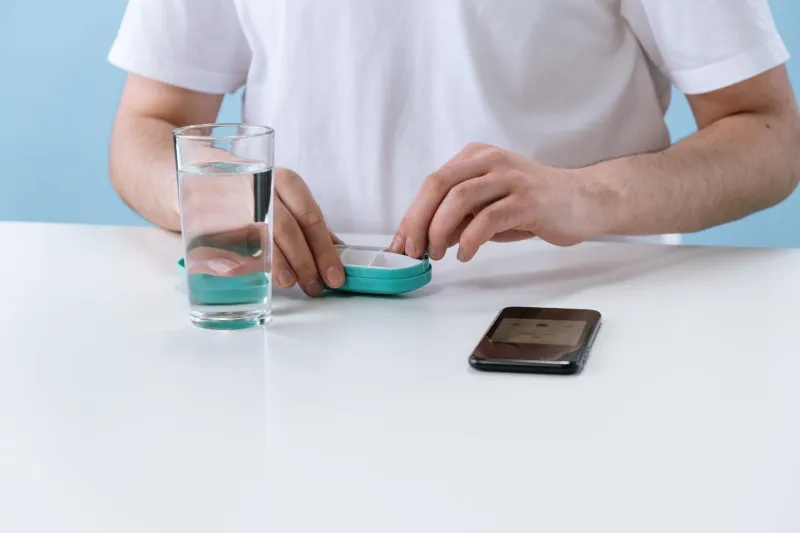
Bring together your pill bottles, the pharmacy bag from your last refill, supplement labels, and any discharge paperwork from a recent hospital or urgent care visit. If your medicines are in a pill organizer, bring the organizer too. If you have photos of labels on your phone, use them.
2. Fill in the basics first
Write your name, date of birth, emergency contact, and pharmacy phone number at the top. This sounds obvious, but it saves time when a clipboard is waiting.
3. Copy one medication at a time
Write the name as it appears on the label. If you know the generic name and the brand name, include both. Add the strength, such as 10 mg or 500 mg. Add the form, such as tablet, capsule, patch, inhaler, or liquid. Then write how you actually take it, not how you are supposed to take it. If you split a tablet with your prescriber's approval, say so. If you take it every other day, say so.
4. Add the non-prescription stuff
This is where many people draw a blank. Walk through your day. Do you take a pain reliever most mornings? Use a sleep aid a few nights a week? Take a vitamin, calcium, magnesium, or herbal tea? Put it down. Include the dose and how often, even if it is approximate.
5. Make copies that make sense
Print two copies. Keep one in your wallet or with your insurance card. Keep one at home where you can grab it quickly. Take a photo of the sheet with your phone. If you are heading to the ER and someone else is driving, hand them the sheet so they can answer questions while you focus on feeling better.
A simple template you can copy
MEDICATION SHEET - updated [date]

Name:
Date of birth:
Emergency contact:
Pharmacy name and phone:

Allergies and reactions:

PRESCRIPTIONS
Medication | Strength/form | How I take it | Prescriber | Why (if known)

OTC AND SUPPLEMENTS
Product | Dose/frequency | Reason | Notes

RECENT CHANGES OR QUESTIONS:
You can write this by hand on an index card or type it into a phone note and print it later. A handwritten page that is current is better than a typed page that is three years old.
Scripts for keeping it current
A medication sheet is not a one-time school project. It needs small updates after refills, pharmacy swaps, and hospital visits. These short scripts can make that easier.
After a refill or pharmacy swap
At the counter, ask: 'This looks different from my last fill. Can you confirm it is the same medicine and strength?' Then update the sheet with the new manufacturer or appearance if that helps you recognize it at home. Write the date at the top.
After a hospital or urgent care visit
Before you leave, ask: 'Can I get a printed list of my discharge medications, and can you tell me which ones I should stop?' Then cross out stopped medicines on your sheet and add new ones. Do not rely on memory for this step. Discharge instructions can be long, and the waiting room was probably loud.
At a new doctor's office
Hand over the page and say: 'This is my best current list. Please tell me what needs correcting.' That sentence does two things. It shows you are organized, and it gives the clinician permission to help you fix gaps without making you feel foolish.
What to leave off the page
Do not put your Social Security number on a medication sheet. You do not need it for this purpose. Skip old prescriptions you stopped years ago unless a clinician has asked about them. Leave out private details that are not related to your health. And do not list a medication as current just because the bottle is still in the cabinet. If you stopped taking it, mark it as stopped or ask your pharmacist whether it should stay on the list.
The sheet is a tool, not a legal document. It is there to help you communicate when you are tired, sick, or sitting in a waiting room with a clipboard balanced on your knee.
The bottom line
You are not expected to remember every dose and every supplement under pressure. You are expected to show up with the best information you can reasonably gather. A one-page medication sheet gives you a calm, simple way to do that. Build it once, update it after changes, and let it do the talking when you would rather not guess.
This is general information, not medical advice. Ask your pharmacist or prescriber if you are unsure about any medication on your list.